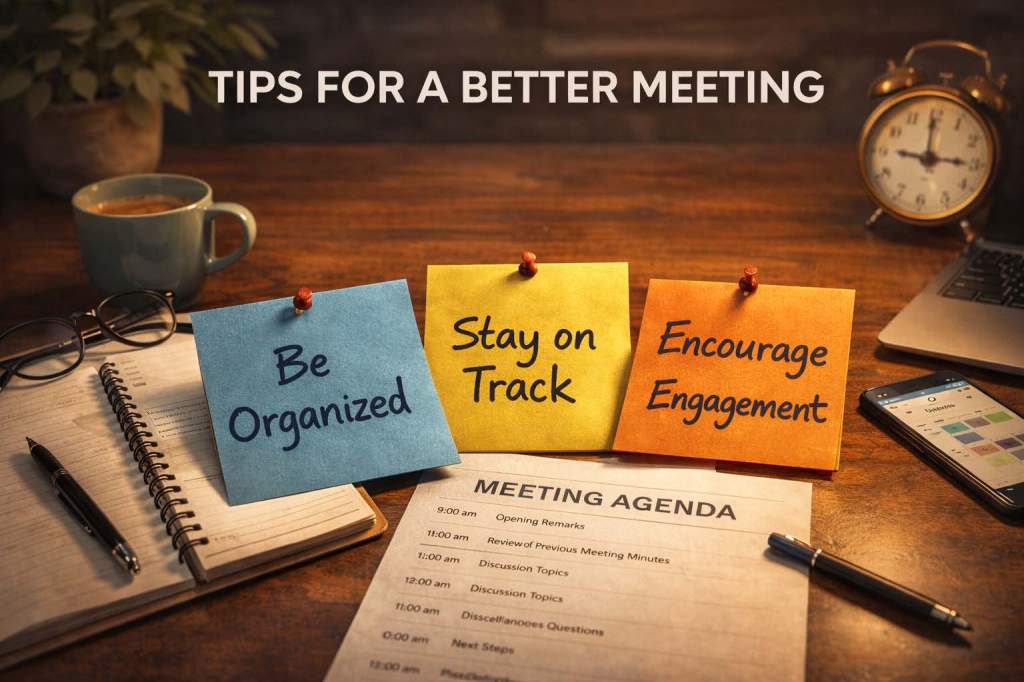
Board meetings can be one of the most rewarding parts of governance—where passionate volunteers come together to make meaningful decisions for the mission. But let’s be real: they’re often exhausting, rambling, or unproductive. Volunteers juggle full lives, and sitting through long, unfocused sessions can lead to disengagement, frustration, or even stepping away.
The good news? You don’t need a complete overhaul to turn things around. Small, intentional tweaks can transform meetings from a necessary chore into focused, energizing sessions that respect everyone’s time and drive real progress. Here are five quick wins—easy to implement right away—that we’ve seen make a noticeable difference for boards of all sizes.
1. Send a Clear, Action-Oriented Agenda in Advance (At Least One Week Ahead)
The #1 complaint in boardrooms? “We don’t know what we’re discussing until we’re there.” Quick Win: Distribute a focused agenda 7+ days early, labeling each item as Inform (background only), Discuss (input needed), or Decide (action required). Include estimated times and “anticipated action” notes (e.g., “Approve budget amendment – vote expected”). Attach pre-reads as a concise packet—no novels. Why it works: People come prepared, discussions stay on track, and volunteers feel their time is valued. Bonus: Use a consent agenda for routine approvals to free up 20–30 minutes for real strategy.
2. Start with Mission & End on Time—Every Time
Volunteering is demanding; don’t add “endless meetings” to the list. Quick Win: Open with a 2–3 minute mission moment—a quick client story, impact highlight, or staff shout-out—to reconnect everyone emotionally. Then, honor the end time religiously (even if it means tabling an item). Use a visible timer for agenda items. Why it works: It reignites purpose early and shows respect for busy lives. Boards that finish on time report higher engagement and better attendance next round.
3. Shift from Reports to Dialogue (60/40 Rule)
Too many meetings are monologues—staff or chairs reading reports while others sit passively. Quick Win: Allocate at least 60% of time to forward-looking discussion and decisions (strategy, risks, opportunities) vs. 40% on updates. Encourage the chair to prompt quieter voices: “Sarah, what’s your take on this?” Rotate who leads short sections. Why it works: Volunteers join boards to contribute ideas, not listen. This taps into their expertise, reduces burnout, and leads to better decisions.
4. Set Ground Rules & Use a Timekeeper
Discussions can spiral into side tangents or dominate by one voice. Quick Win: Co-create simple norms at the start of the year (or refresh annually): “One conversation at a time,” “Park off-topic ideas,” “Speak once before repeating.” Appoint a gentle timekeeper (not the chair) to give polite alerts. Why it works: It creates psychological safety and fairness, especially in hybrid or diverse groups. In Canadian contexts (like under Alberta’s Societies Act rules), clear processes also help avoid compliance slip-ups during debates.
5. End with Quick Feedback & Clear Next Steps
Meetings often fizzle out without closure. Quick Win: Spend the last 5 minutes on: “What went well? What could improve?” (anonymous poll if needed) and assign clear owners/deadlines for any actions. Send minutes with decisions and tasks within 48 hours. Why it works: It builds continuous improvement, reinforces accountability, and gives volunteers a sense of progress—making them more likely to show up energized next time.
These aren’t revolutionary—they’re practical adjustments that honor the real challenges of board service. Implement one or two at your next meeting and watch the energy shift.
If your board wants help crafting better agendas, facilitating norms, or building a full governance toolkit (like pairing this with strong bylaws or orientation), Pen to Anvil is here to guide you through it. A short consultation can uncover quick custom wins tailored to your group.
Board meetings don’t have to be draining—they can be productive and even enjoyable. Start small, see the difference, and build from there.
Which of these quick wins resonates most with your board’s current pain points? Share in the comments—we love hearing real experiences!

 Pen to Anvil Advisors
Leave a comment