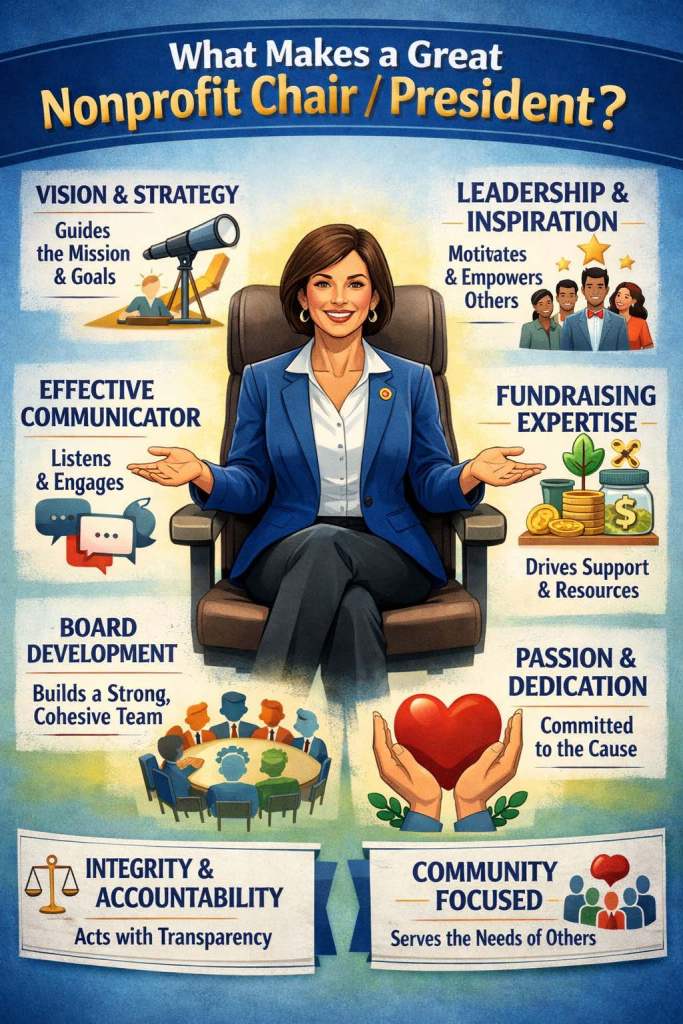
Leading a nonprofit/organizational board as Chair (or President) is one of the most impactful volunteer roles out there. You guide strategy, foster collaboration, support the executive director/CEO, and keep the entire board focused on mission impact. But it’s not easy—volunteering at this level means juggling responsibilities, managing diverse personalities, navigating tough decisions, and doing it all without a paycheck or full-time staff support.
Many Chairs step into the role because they’re passionate and capable or believe they will be dictating what will be done. Yet find they find out the leadership demands steeper or different from what was expected. The difference between a good Chair and a truly outstanding one often comes down to a handful of key qualities and habits. These aren’t about being perfect; they’re about showing up in ways that build trust, momentum, and results.
Here are the core attributes we’ve seen separate exceptional nonprofit board Chairs from the rest—especially in Canadian nonprofits under frameworks like the Societies Act, Agricultural Societies Act, and Cooperative Act.
1. Genuine Passion and Personal Commitment to the Mission
An outstanding Chair doesn’t just like the cause—they live it. They’re deeply invested, willing to give time, talent, and often treasure (leading by example in fundraising). This passion is contagious: it motivates other volunteers, reassures staff, and keeps the board anchored during challenges.
Quick test: Does the Chair talk about the mission with real enthusiasm, even in tough times? If yes, they’re probably leading from the heart.
2. Wants the Job (and Is Willing to Work at It)
Too many Chairs end up in the role by default (“no one else would do it”). Great ones actively want it and commit to growing into the role. They prepare for meetings, seek feedback, and treat chairing as a skill to hone—not a title to hold.
Why it matters: When the Chair is all-in, the board feels energized rather than dragged along.
3. Strong Facilitation and Emotional Intelligence
The Chair runs the board meetings, not the organization (that’s the ED/CEO’s job). They excel at creating space for all voices—especially quieter ones—while gently steering discussions back on track. Emotional intelligence helps read the room, manage tension, build relationships, and foster psychological safety.
In practice: They use phrases like “Let’s hear from someone who hasn’t spoken yet” or “How does this align with our mission?” to keep things inclusive and productive.
4. Clear Understanding of Roles and Boundaries
Outstanding Chairs know governance vs. management: the board sets policy and strategy; staff executes. They partner closely with the ED/CEO as a strategic thought partner—offering support without micromanaging. They also hold the board accountable (attendance, prep, contributions) while modeling humility and reliability.
Red flag to avoid: Acting like a “shadow CEO” creates confusion and conflict.
5. Big-Picture Vision + Practical Focus
They see the forest (long-term impact, risks, opportunities) but also tend to the trees (effective meetings, succession planning, board recruitment). They inspire forward-thinking while ensuring the basics get done—agendas sent early, meetings ending on time, actions followed up.
Bonus habit: They champion board development—orientation, training, diversity—because a strong board serves the mission better.
6. Reliability, Integrity, and Humility
Show up prepared, on time, and consistent. Act with honesty and transparency. Admit when they don’t know something and seek input. Humble confidence means leading without ego—celebrating team wins and sharing credit. An additional point is that they are willing to mentor the next candidates that show interest in the position. The end point is to have a long-term sustainable organization that will endure when changes in the executive happens.
Why these matter: In volunteer-led groups, trust is everything. A Chair who embodies these builds a culture where people want to contribute more.
7. Partnership Mindset (Especially with the ED/CEO)
The best Chairs treat the executive as a true partner: regular check-ins, honest feedback, mutual respect. They energize each other rather than compete or undermine.
Result: Smoother governance, less burnout, stronger organizational health.
Being an outstanding Chair isn’t about having all the answers—it’s about asking the right questions, listening well, and creating conditions for the whole board to thrive. Volunteering in this role is demanding, but when done thoughtfully, it multiplies impact exponentially.
If your board is electing a new Chair, refreshing leadership, or supporting someone in the role, Pen to Anvil can help. We guide transitions, facilitate role clarity discussions, and provide tools (like chair checklists or meeting frameworks) tailored to your nonprofit’s size and context—whether it’s a small community group or a larger organization.
Ready to strengthen your board leadership? Reach out for a no-obligation chat—we’re here to make governance easier and more effective.
What’s one quality you’ve seen make a huge difference in a board Chair? Share in the comments—we’re building this knowledge together!

 Pen to Anvil Advisors
Leave a comment