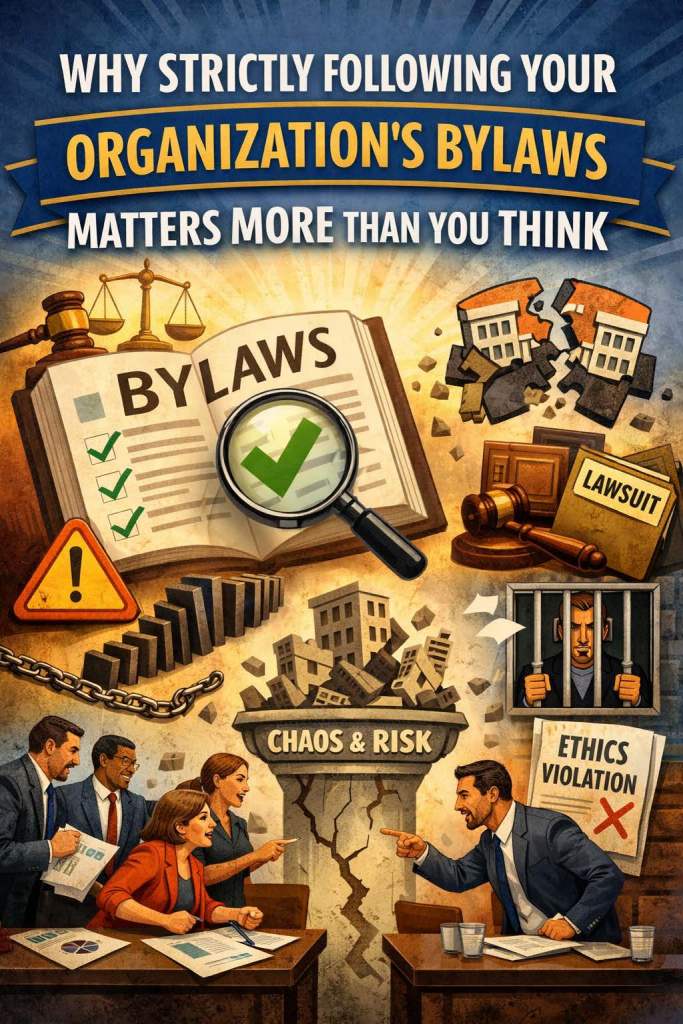
In the day-to-day rush of board meetings, strategic planning, and community decisions, bylaws can feel like dusty paperwork tucked away in a binder. But treating them as optional or flexible is one of the quickest ways an organization can invite legal headaches, internal conflicts, disputes with members/stakeholders, or even loss of good standing.
Here’s why adhering to your bylaws isn’t just “good practice”—it’s essential protection and foundation for effective governance:
- They Are Your Organization’s Constitution Bylaws aren’t suggestions; they are the legally binding rules your organization has chosen (and often registered) to govern itself. In Alberta, for societies under the Societies Act, non-profits, co-ops, or municipal-adjacent bodies, bylaws define everything from quorum requirements and voting procedures to term limits, conflict-of-interest rules, and amendment processes. Deviating from them—even unintentionally—can render decisions invalid, open the door to member challenges, or trigger regulatory scrutiny.
- Protects Against Personal Liability Board members and officers generally enjoy protection when acting in good faith and within the rules. But straying from bylaws (e.g., holding a vote without proper notice, skipping required audits, or overriding election procedures) can pierce that shield. Courts and regulators view bylaws as the line between prudent governance and negligence. Following them diligently demonstrates due diligence and reduces personal risk for directors.
- Prevents Costly Disputes and Corrections Real-world examples abound: a board approves a major expenditure without the required special resolution quorum → a member sues to invalidate it → legal fees pile up. Or an election proceeds without following nomination timelines → results are contested → the organization faces months of instability. Proactive compliance avoids these expensive detours.
- Supports Strong Minutes and Accountability As we’ve discussed in governance circles, concise minutes focused on actions and decisions shine brightest when the agenda and meeting procedures strictly follow bylaws. If bylaws require specific notice periods, recording of conflicts, or ratification steps, documenting compliance in the minutes creates a clear audit trail. This synergy between bylaws, agendas, and minutes turns good governance into defensible records.
- Builds Trust and Consistency Consistent adherence fosters fairness and predictability—key to member confidence. When bylaws are followed, everyone knows the rules of the game: how meetings are called, how minutes are recorded and approved, how decisions are made. This reduces accusations of favoritism, rushed processes, or “power grabs.” In contrast, ignoring bylaws erodes trust and can lead to factionalism or member disengagement.
Practical Tips to Make Compliance Easier
- Review Annually: Schedule a bylaws “health check” at your AGM or strategic session.
- Train New Board Members: Include a quick bylaws overview in orientation—highlight key sections on meetings, voting, and duties.
- Use Checklists: Create simple pre-meeting checklists tied to bylaw requirements (e.g., quorum verification, notice proof).
- Amend When Needed: If bylaws are outdated or impractical, follow the amendment process properly rather than ignoring them.
- Seek Advice Early: When in doubt, consult a governance advisor or legal expert familiar with your organization type (Societies Act, Cooperatives Act, etc.).
In a nutshell, can we truly place our trust in an organization that struggles to adhere to its own established guidelines? It’s a concerning thought, and one that many others might share as well.
At Pen to Anvil Advisors, we help organizations turn bylaws from a compliance burden into a strategic asset—through clear procedures, effective minute-taking, and board training that keeps everyone aligned and protected.
If your organization is facing bylaw questions, meeting challenges, or governance refresh needs, reach out. Let’s ensure your “pen to anvil” process forges strong, defensible outcomes.
Have questions or a specific bylaw scenario you’d like explored? Drop a comment or connect—I’m here to help.

 Pen to Anvil Advisors
Leave a comment