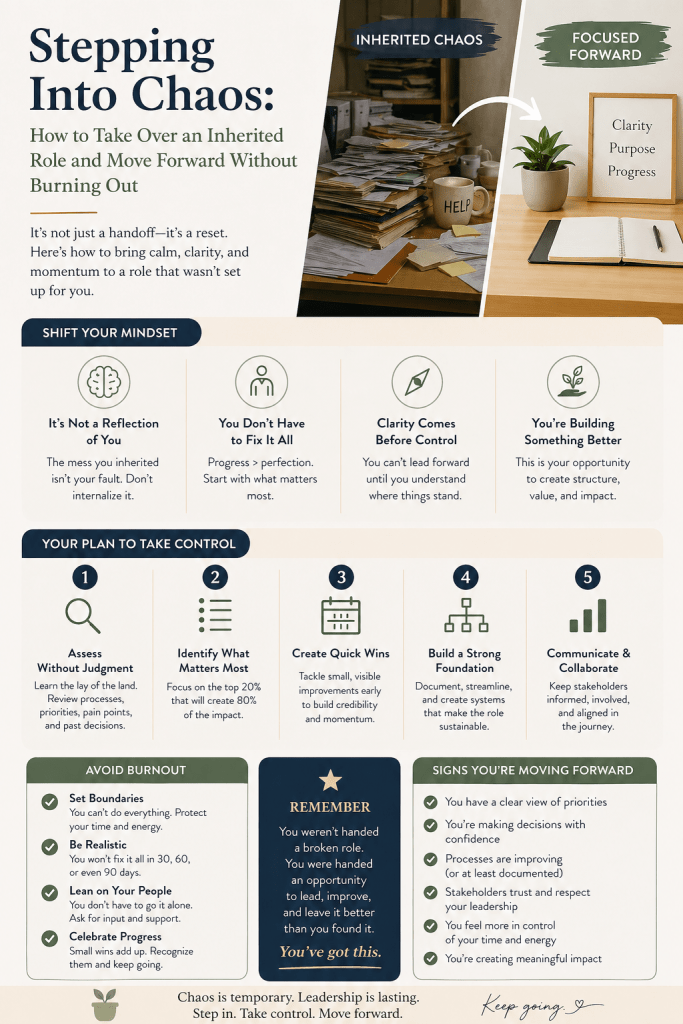
You land the new position — great opportunity, good people, and a chance to make a real difference. Then the reality settles in: records are incomplete, reports trail off, licences and approvals have gaps, and some important items have been sitting longer than anyone would like.
This scenario is more common than most people admit, especially during times of organizational change. When senior management shifts, staffing transitions pile up, and one person has been carrying a heavy load, things can slip through the cracks. It’s rarely because anyone was careless — it’s usually the result of too much change happening too quickly with limited hands on deck.
If you’ve recently stepped into a role like this, here’s how to move forward in a healthy, sustainable way while respecting the efforts of those who came before you.
1. Start with Understanding, Not Judgment
Approach the situation with curiosity instead of criticism. The previous team was likely doing their best under challenging circumstances — especially if there has been recent turnover at the senior level. Your role now is to build on what exists and help bring greater stability.
2. Give Yourself Permission to Assess First
Don’t rush in trying to fix everything immediately. Burnout starts when we treat every gap as an emergency.
Use your first 30–60 days to get oriented:
- Take stock of what’s in place and what’s missing.
- Identify the highest-risk items (compliance, liability, or operational blockers).
- Prioritize using a simple system: Red (urgent), Yellow (this quarter), Green (longer term).
This calm assessment prevents you from feeling overwhelmed right away.
3. Document Factually and Professionally
Keep clear, neutral records of what you find and the steps you’re taking. Good documentation protects the entire team and creates a stronger foundation going forward — it’s not about pointing fingers, but about building continuity.
4. Communicate Constructively
When updating your supervisor, council, or board, frame things positively:
- “Here’s what I’ve discovered so far…”
- “These are the priority areas I recommend focusing on…”
- “Here’s a realistic plan to address them over the coming months…”
A steady, solution-focused approach earns trust and support much faster.
5. Protect Your Energy — This Is a Marathon
With recent senior management changes, there’s often an expectation that things will improve quickly. That pressure is real, but you still need to pace yourself:
- Block focused work time and guard it.
- Celebrate small wins along the way.
- Connect with peers in other municipalities who’ve handled similar transitions.
- Be willing to say “not this quarter” to lower-priority items.
You’ll serve your team and your county far better by staying sustainable than by burning out in the first year.
6. Turn This Into an Opportunity to Strengthen the Department
Use your experience to gradually build better systems — clearer templates, improved tracking, and shared knowledge. The goal isn’t just to clean up — it’s to make the department more resilient for the future.
Final Thought
Stepping into a role after major organizational changes can feel daunting. But if you were hired for your experience and ability to navigate complexity, trust that you’re exactly where you need to be.
You don’t have to fix everything overnight. Your job is to steadily improve the situation, support your team, and leave things stronger than you found them — one thoughtful step at a time.
Have you ever inherited a role during a time of change? What helped you find your footing without burning out? Share your thoughts in the comments.

 Pen to Anvil Advisors
Leave a comment