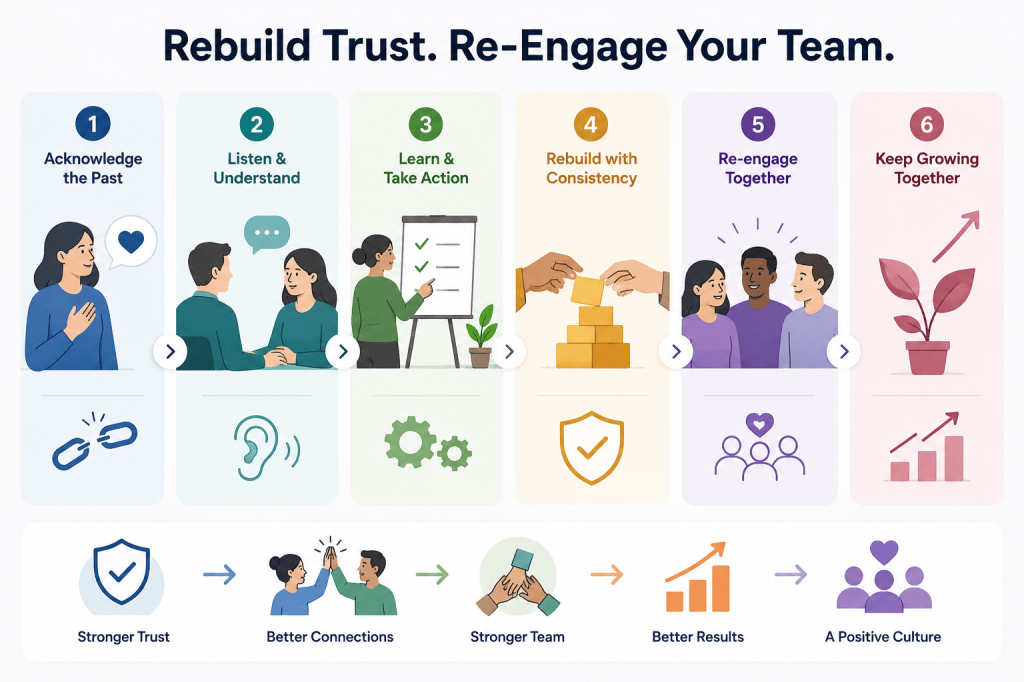
When previous trauma, drama, or poor peformance from peers and management left the team cynical, disengaged, or distrustful, recovery is possible. Here’s a practical guide for leaders to acknowledge the damage, rebuild credibility, and reignite motivation.
Introduction
Change in leadership often brings skepticism, distrust, fear—but also hope. If your team has endured poor decision-making, broken promises, lack of support, or toxic behaviors from past experience, disillusionment doesn’t vanish overnight. Employees may withdraw, “quiet quit,” openly doubt new initiatives or resist any changes.
The good news? Trust can be rebuilt. It requires honesty, consistency, and sustained action. Ignoring the issue only deepens the divide. Here’s how forward-thinking leaders can turn things around.
1. Acknowledge the Past Transparently
The first step is validation. Employees need to hear that their experiences were real and that the organization recognizes the impact.
- Hold town halls or listening sessions where leaders openly admit past shortcomings without blame-shifting or excuses.
- Share what went wrong and what’s different now. For example: “We know decisions in the past left people feeling undervalued, and we’re committed to doing better.”
- Avoid corporate spin—authenticity builds the foundation for trust.
This step reduces cynicism and shows psychological safety is returning.
2. Listen Actively and Gather Honest Feedback
Disillusioned staff often feel unheard. Reverse that dynamic.
- Conduct one-on-one meetings and anonymous surveys focused on root causes (workload, recognition, career growth, fairness).
- Ask probing but open questions: “What would need to change for you to feel more connected and valued here?”
- Really listen—then summarize what you heard and share back how it will inform actions. This demonstrates respect and closes the feedback loop.
3. Take Visible, Consistent Action
Words alone won’t suffice—actions rebuild credibility fastest.
- Follow through on commitments, even small ones (e.g., responding to feedback within a set timeframe).
- Address systemic issues: unfair workloads, unclear expectations, or lack of development opportunities.
- Implement quick wins (e.g., improved recognition programs, clearer career paths) while working on bigger structural changes.
- Hold managers accountable with training in emotional intelligence, transparent communication, and supportive leadership.
Consistency over time proves this isn’t just another flavor-of-the-month initiative.
4. Re-engage Through Involvement and Purpose
Disillusionment often stems from feeling powerless. Restore agency:
- Involve employees in decision-making where possible (e.g., process improvements, team goals).
- Reconnect work to a broader “why” through regular updates on impact and progress.
- Offer personalized development plans and growth opportunities to show investment in their future.
- Foster team connection with collaborative activities or cross-functional projects.
5. Monitor Progress and Sustain the Momentum
Rebuilding trust is a marathon:
- Track metrics like engagement scores, retention, absenteeism, and qualitative feedback.
- Conduct regular pulse checks and adjust as needed.
- Celebrate early successes publicly to build positive momentum.
- Be prepared that some individuals may not recover—focus on those who show willingness while addressing persistent negativity appropriately.
Common Pitfalls to Avoid
- Over-promising quick fixes.
- Inconsistent behavior from leadership.
- Failing to address ongoing issues from the old regime (e.g., keeping problematic processes or people in place).
- Rushing past the acknowledgment phase.
Be Cautiously Optomistic
Under the SMART GOAL system, the R, for Realistic, will be the “key stone” of the plan. Keep expectations reasonable, past trauma runs deep, don’t expect everyone to reengage, expect people to resist change as some might have accepted disfunction as the norm or want to protect themselves from disappointment once again. Workplace culture is a long, very long path that needs constant maintenance and care.
Conclusion
We would do well to remember the timeless adage: you can lead a horse to water, but you cannot make it drink. True re-engagement cannot be mandated; it must be cultivated. Leaders set the table with trust, respect, and possibility—yet it is the employee who must decide to partake. Dealing with disillusioned staff after poor performance and outcomes tests leadership—but it also creates an opportunity to build a stronger, more resilient culture. By leading with transparency, empathy, and consistent action, you can transform skepticism into engagement and loyalty.
Teams that survive and recover from bad culture often emerge more cohesive and committed. Start small, stay consistent, and measure what matters. Your people are watching—and they’ll respond when they see real change.
Remind yourself: You’re not responsible for their past trauma, but you are responsible for standards and culture now.

 Pen to Anvil Advisors
Leave a comment